
How Coastal Weather Affects Car Paint in Santa Monica, CA?
If you live near the beach, understanding How Coastal Weather Affects Car Paint in Santa Monica, CA? is essential for protecting your vehicle. While Santa Monica offers beautiful ocean views and year-round sunshine, the same coastal conditions that make the area attractive can be harsh on your car’s exterior.
Salt air, intense UV exposure, moisture, and airborne contaminants can gradually damage your vehicle’s paint if left unprotected. In this guide, you’ll learn how coastal weather affects your car and what you can do to keep it looking its best for years to come.
What Is Coastal Weather and Why Does It Matter?
Coastal weather refers to environmental conditions commonly found near the ocean, including:
- Salt-laden air
- Higher humidity levels
- Intense sun exposure
- Ocean mist and moisture
- Wind-driven sand and debris
While these elements may seem harmless, they can significantly impact your vehicle’s paint, clear coat, and overall appearance over time.
How Coastal Weather Affects Car Paint in Santa Monica, CA
How Coastal Weather Affects Car Paint in Santa Monica, CA? Coastal conditions accelerate paint deterioration through salt exposure, UV damage, oxidation, moisture retention, and contamination buildup. Without proper protection, these factors can cause fading, corrosion, and loss of gloss.
The Biggest Threats to Your Vehicle's Paint
1. Salt Air Exposure
Ocean air contains tiny salt particles that settle on your vehicle’s surface.
Why this is a problem:
- Salt attracts moisture
- Accelerates oxidation
- Increases corrosion risk
- Breaks down protective layers
Even vehicles parked several miles from the beach can be affected by airborne salt.
2. Intense UV Radiation
Santa Monica enjoys abundant sunshine, but prolonged UV exposure can damage paint over time.
UV damage can cause:
- Paint fading
- Clear coat deterioration
- Loss of gloss
- Color discoloration
Dark-colored vehicles are often especially vulnerable to sun-related fading.
3. Moisture and Humidity
Coastal air tends to contain more moisture than inland areas.
Excess moisture contributes to:
- Oxidation
- Water spots
- Mold growth in neglected areas
- Corrosion of exposed metal components
When moisture combines with salt, damage can occur even faster.
4. Sand and Wind-Blown Debris
Coastal winds often carry fine sand particles and debris.
Potential paint damage includes:
- Micro-scratches
- Swirl marks
- Abrasion of the clear coat
- Surface contamination
Over time, these small imperfections can diminish your vehicle’s appearance.
Common Signs of Coastal Paint Damage
Watch for these early warning signs if you frequently drive or park near the ocean:
Paint-related symptoms:
- Dull or faded finish
- Reduced shine
- Water spots
- Oxidation
- Surface roughness
Corrosion-related symptoms:
- Rust spots
- Corrosion around trim
- Damage near wheel wells
- Undercarriage rust
Addressing these issues early can prevent costly repairs.
How to Protect Your Vehicle from Coastal Weather
1. Wash Your Car Frequently
Regular washing removes salt, sand, and contaminants before they can cause damage.
Recommended schedule:
- Wash every 1–2 weeks
- Rinse thoroughly after beach trips
- Pay extra attention to the undercarriage
Consistent cleaning is one of the simplest ways to protect your paint.
2. Apply Ceramic Coating
Ceramic coating is one of the most effective solutions for coastal vehicle protection.
Benefits include:
- Hydrophobic protection
- UV resistance
- Easier cleaning
- Reduced contaminant bonding
- Enhanced gloss
The coating acts as a barrier between the environment and your paint.
3. Park Strategically
Whenever possible:
- Use a garage
- Park in shaded areas
- Avoid prolonged exposure near the shoreline
- Use a quality car cover
Reducing exposure can significantly slow paint deterioration.
4. Remove Contaminants Quickly
Bird droppings, tree sap, and salt residue should never remain on your vehicle for long.
Prompt removal helps prevent:
- Etching
- Staining
- Permanent paint damage
The sooner contaminants are removed, the better.
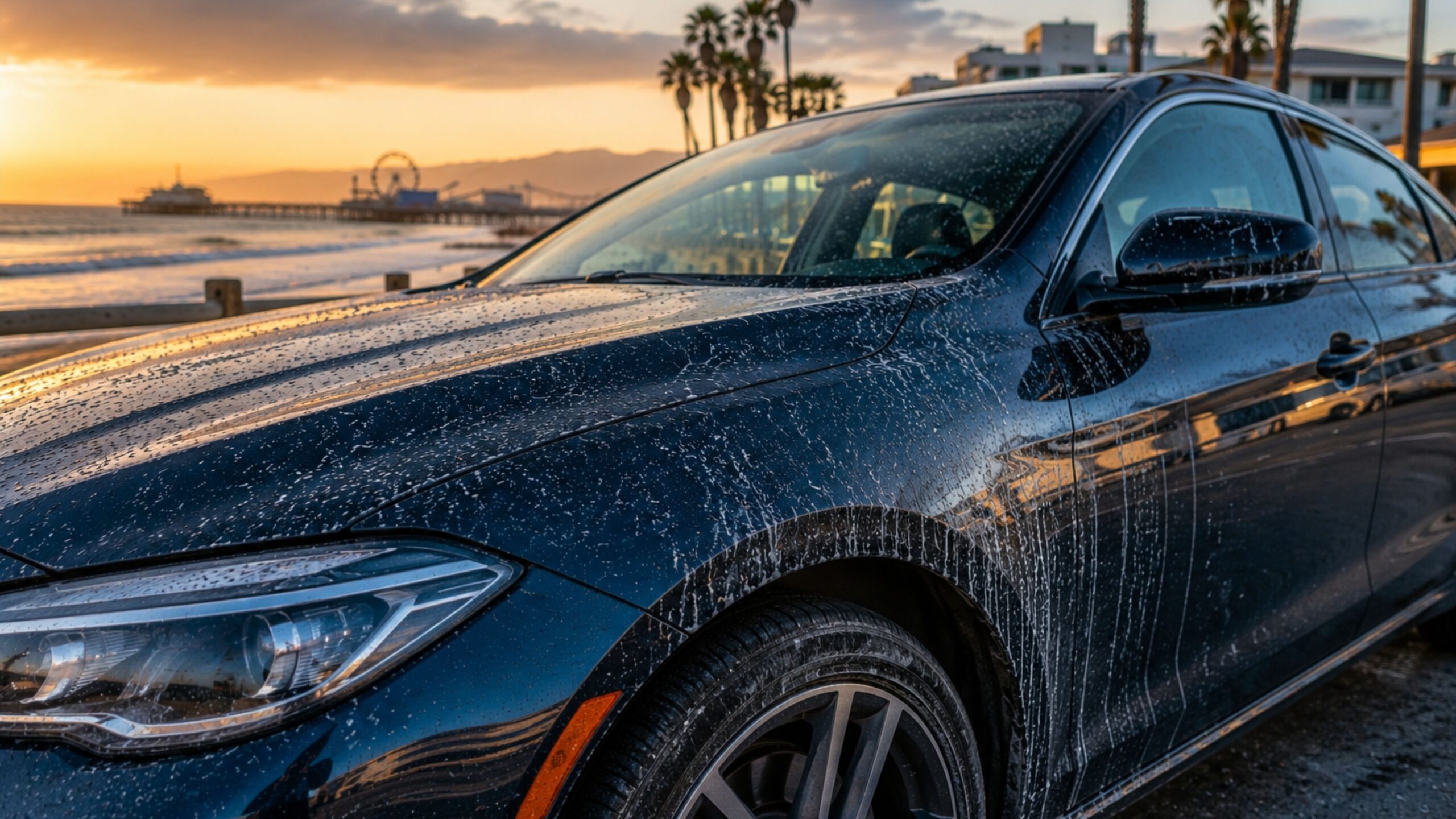
Why Ceramic Coating Is Ideal for Santa Monica Drivers
For coastal vehicle owners, ceramic coating offers several advantages.
Ceramic coating helps:
- Shield paint from salt air
- Reduce UV damage
- Resist oxidation
- Make maintenance easier
- Preserve gloss and appearance
While it doesn’t make your vehicle invincible, it provides an additional layer of protection against Santa Monica’s challenging coastal conditions.
Why Choose Us for Coastal Paint Protection?
At Ceramic Coat Pros, we understand the unique challenges that Santa Monica drivers face. Our professional ceramic coating services are designed to protect vehicles from the harsh effects of coastal weather while maintaining a beautiful finish.
Why customers choose us:
- Experienced paint protection specialists
- Premium ceramic coating products
- Professional paint correction services
- Customized protection plans
- Long-lasting results
Our goal is to help you preserve your vehicle’s appearance and value despite the challenges of coastal living.
FAQ: Coastal Weather and Vehicle Paint
Does ocean air really damage car paint?
Yes. Salt particles in ocean air can accelerate oxidation, corrosion, and paint deterioration over time.
How often should I wash my car near the beach?
Most experts recommend washing your vehicle every 1–2 weeks and after significant beach exposure.
Can ceramic coating protect against salt air?
Yes. Ceramic coating helps create a protective barrier that reduces the impact of salt, moisture, and contaminants.
Why does my car fade faster near the ocean?
Coastal areas combine UV exposure, moisture, and salt air, which accelerate paint aging and oxidation.
Is rust more common in coastal areas?
Yes. Salt exposure increases the likelihood of corrosion, especially on unprotected metal surfaces and undercarriages.
Protect Your Paint from Santa Monica's Coastal Conditions
Understanding How Coastal Weather Affects Car Paint in Santa Monica, CA? allows you to take proactive steps before damage occurs. Salt air, UV rays, moisture, and contaminants all work together to accelerate paint deterioration, but proper maintenance and protection can significantly reduce these risks.
Investing in regular care and professional paint protection helps keep your vehicle looking newer and performing better for years.
Defend Your Vehicle Against Coastal Damage Today
Your vehicle faces daily exposure to some of the toughest environmental conditions in Southern California. At Ceramic Coat Pros, we provide professional ceramic coating and paint protection solutions specifically designed to combat the effects of Santa Monica’s coastal climate.
👉 Contact us today to protect your vehicle with long-lasting ceramic coating, enhanced gloss, and expert defense against salt air, UV rays, and coastal weather damage.