
How to Prevent Paint Oxidation Near the Beach?
If you live near the coast, the culprit may be something you can’t easily see: salt-laden air, intense UV exposure, and coastal moisture. These environmental factors can accelerate paint oxidation, causing your vehicle to lose its shine and value far sooner than expected.
The good news is that paint oxidation is preventable with the right protection strategy. In this guide, you’ll learn how coastal conditions affect your vehicle and the most effective ways to preserve your paint for years to come.
Want professional protection without the guesswork? Ceramic Coat Pros can evaluate your vehicle and recommend the right solution before oxidation becomes a costly problem.
What Is Paint Oxidation?
Paint oxidation occurs when oxygen, sunlight, and environmental contaminants gradually break down your vehicle’s paint and clear coat.
Over time, the paint loses its protective properties and begins to show visible signs of deterioration.
Common Signs of Paint Oxidation
- Faded paint color
- Dull or chalky appearance
- Loss of gloss and shine
- Rough paint texture
- Clear coat deterioration
Once oxidation progresses, restoring the finish becomes more difficult and expensive.
Why Beachside Vehicles Are More Vulnerable
Living near the ocean offers incredible views, but it creates one of the harshest environments for vehicle paint.
Salt Air Accelerates Damage
Microscopic salt particles settle on your vehicle every day.
These particles attract moisture and create a corrosive environment that speeds up paint degradation.
Intense UV Exposure
Coastal areas often receive strong sunlight year-round.
UV rays break down paint pigments and weaken the clear coat, making oxidation happen faster.
High Humidity and Moisture
Moisture combined with salt creates the perfect conditions for oxidation and corrosion.
Even vehicles parked indoors can be affected if they are regularly exposed to coastal air.
The Cost of Ignoring Paint Oxidation
Many vehicle owners assume fading paint is only a cosmetic issue.
In reality, oxidation can lead to:
- Reduced resale value
- Permanent paint damage
- Clear coat failure
- Costly repainting expenses
- Increased corrosion risk
Protecting your paint early is almost always less expensive than correcting severe oxidation later.
How to Prevent Paint Oxidation Near the Beach
Wash Your Vehicle More Frequently
Salt buildup is one of the biggest contributors to oxidation.
Regular washing helps remove contaminants before they damage the paint.
Best Practices
- Wash every 1-2 weeks
- Use pH-balanced automotive shampoo
- Rinse thoroughly after beach trips
- Clean wheel wells and lower panels
Consistency matters more than intensity.
Apply Long-Term Paint Protection
A protective barrier helps prevent salt, moisture, and UV rays from directly attacking the paint.
Protection Options Include:
- Traditional wax
- Paint sealants
- Ceramic coatings
While wax offers short-term protection, ceramic coating provides significantly longer-lasting defense against coastal conditions.
Why Ceramic Coating Is Ideal for Coastal Environments
Vehicle owners near the beach face unique challenges.
Ceramic coating creates a durable barrier that helps reduce direct exposure to environmental contaminants.
Benefits of Ceramic Coating
Enhanced UV Protection
- Helps minimize fading caused by sunlight
Hydrophobic Performance
- Water and contaminants slide off more easily
Reduced Salt Adhesion
- Makes salt deposits easier to remove
Long-Term Gloss Retention
- Maintains a deeper shine for longer
Simplified Maintenance
- Less effort required to keep the vehicle clean
For many coastal drivers, ceramic coating offers one of the most effective long-term solutions available.
Park Smarter Whenever Possible
Where you park can significantly impact paint longevity.
Whenever Possible:
- Park in a garage
- Use covered parking
- Avoid prolonged beachside parking
- Use a high-quality vehicle cover
Reducing daily exposure can dramatically slow oxidation.
Address Contaminants Immediately
Some contaminants can damage paint surprisingly quickly.
Remove Promptly:
- Bird droppings
- Tree sap
- Salt residue
- Bug splatter
Allowing these materials to sit on the paint increases the likelihood of staining and oxidation.
Schedule Regular Paint Inspections
Many vehicle owners don’t notice oxidation until it’s already advanced.
Professional inspections can identify:
- Early oxidation
- Clear coat deterioration
- Surface contamination
- Areas needing protection
Early intervention often prevents more expensive restoration work later.
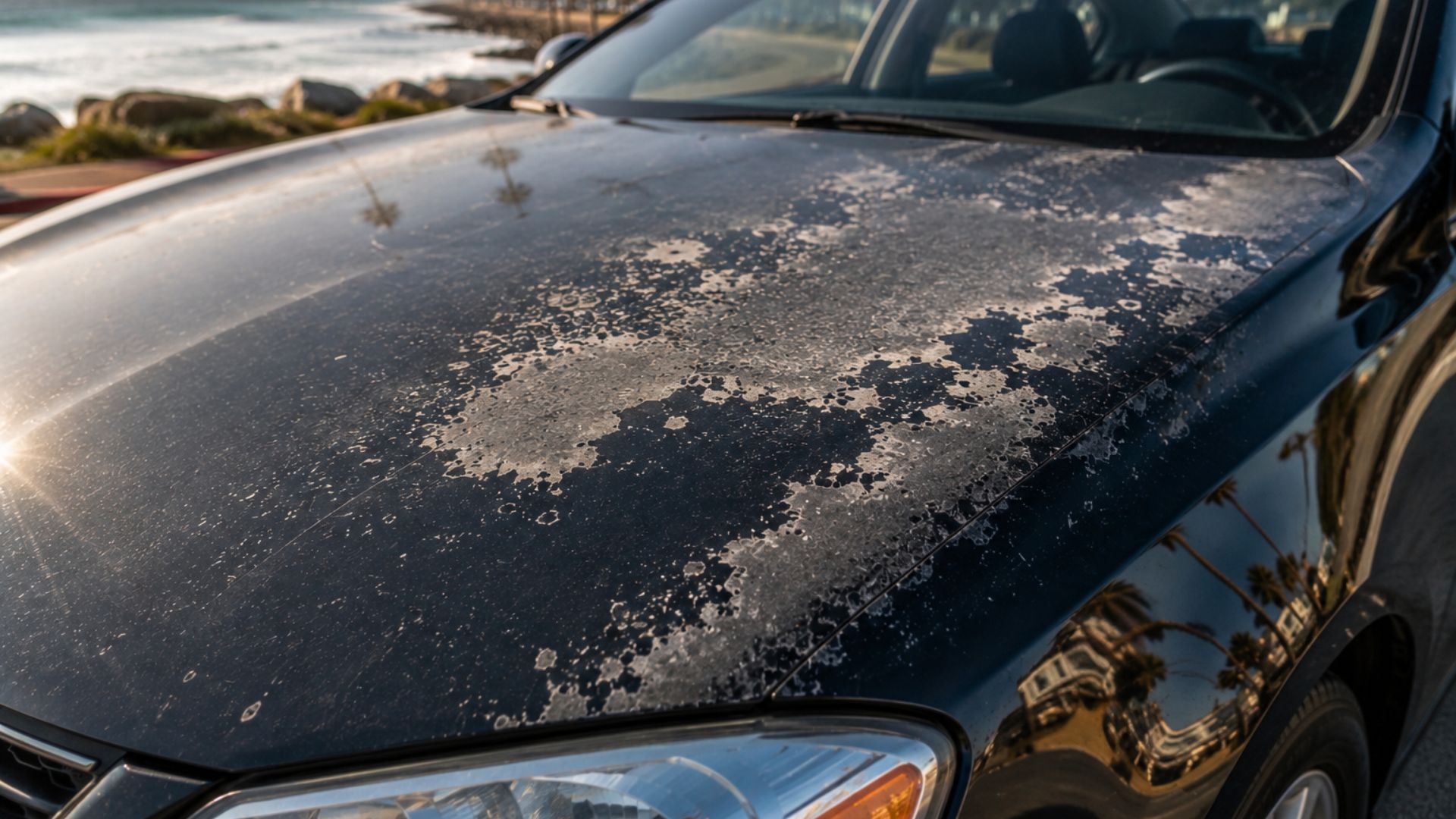
Signs Your Vehicle May Already Need Professional Attention
Watch for these warning signs:
Your Vehicle May Need Paint Correction If:
- The paint looks dull even after washing
- Water no longer beads on the surface
- Fading is visible on the hood or roof
- The finish feels rough to the touch
- Oxidation spots are appearing
The sooner these issues are addressed, the better the outcome.
Why Vehicle Owners Choose Ceramic Coat Pros
Protecting paint near the coast requires more than a quick wax application.
At Ceramic Coat Pros, we specialize in helping vehicle owners preserve their paint against harsh environmental conditions.
What Sets Us Apart
- Professional paint evaluations
- Expert paint correction services
- Premium ceramic coating systems
- Long-term protection strategies
- Customized solutions based on vehicle condition
Our goal is simple: help you keep your vehicle looking newer for longer.
Frequently Asked Questions
How quickly can beach air cause paint oxidation?
The timeline varies, but vehicles exposed to coastal conditions daily can begin showing oxidation signs much sooner than inland vehicles.
Is washing enough to prevent oxidation?
Regular washing helps, but combining washing with a protective coating provides much stronger long-term protection.
Can oxidation be reversed?
Mild oxidation can often be corrected through professional paint correction. Severe oxidation may require repainting.
Does ceramic coating stop oxidation completely?
No protection is absolute, but ceramic coating significantly reduces the factors that contribute to oxidation.
Is ceramic coating worth it near the beach?
For many coastal vehicle owners, the added protection against UV rays, salt, and moisture makes ceramic coating a valuable investment.
Keep Your Paint Looking New Despite Coastal Conditions
Beach living shouldn’t mean sacrificing your vehicle’s appearance.
By removing salt regularly, protecting the paint, limiting UV exposure, and investing in long-term protection, you can dramatically reduce oxidation and preserve your vehicle’s finish for years.
The sooner you protect your paint, the easier it is to maintain that glossy, showroom-quality look.
Schedule a Paint Protection Consultation Today
If your vehicle is exposed to coastal air, now is the best time to protect it before oxidation takes hold.
Contact Ceramic Coat Pros today for a professional paint evaluation and discover how ceramic coating can help safeguard your vehicle against salt, UV rays, and long-term coastal damage. Your future self—and your paint—will thank you.